

Vitamin D – Clinical Pathways Podcast
Current Status
Price
Get Started
Course Credit
The following credits are available for this course:
| AMA PRA Category 1 Credits™ (MD, DO, NP, PA) | 0.5 hours |
| Contact Hours (Nurse) | 0.5 hours |
| American Academy of Physician Assistants (AAPA) Category 1 CME Credits | 0.5 hours |
| CPE Credits (Pharmacist) | 0.5 hours |
| General Attendance | 0.5 hours |
(Note: a course evaluation is required to receive credit for this course.)
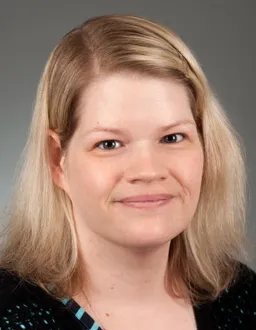
Christina Jacobsen, MD, PhD
Executive Director, Skeletal Health Center, Boston Children’s Hospital
Attending Physician, Divisions of Endocrinology & Genetics and Genomics, Boston Children’s Hospital
Assistant Professor of Pediatrics, Harvard Medical School
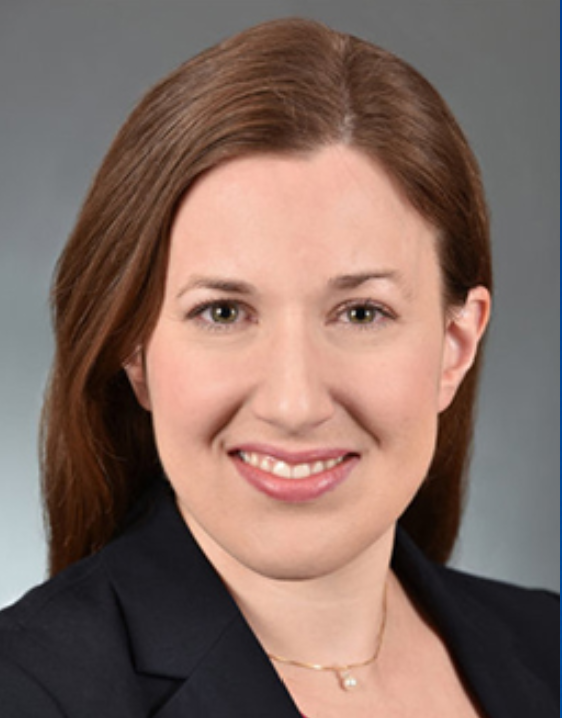
Moderator: Miya Bernson-Leung, MD, EdM
Program Director, Child Neurology Residency Training Program, Boston Children’s Hospital
Medical Director of Continuing Education, Center for Educational Excellence and Innovation, Boston Children’s Hospital
Assistant Professor of Neurology, Harvard Medical School
This episode of the Boston Children’s Hospital Clinical Pathways Podcast reviews the development and clinical application of the Vitamin D Deficiency pathway, designed to guide both specialty and primary care providers in screening, treatment, and follow-up. The discussion highlights common and overlooked risk factors for deficiency, practical supplementation strategies, safety considerations, and when specialty referral is necessary. Emphasis is placed on empowering clinicians to manage vitamin D deficiency effectively within the medical home using standardized, evidence-based guidance.
Clinical Pathways are educational reference tools developed by Boston Children’s Hospital clinicians which focus on the diagnosis and management of a wide variety of clinical conditions based on up-to-date evidence and expert practice. On this show, host Miya Bernson-Leung, MD, EdM, Medical Director of Continuing Education and a member of the Clinical Pathways Advisory Committee, interviews clinical experts to take you behind each pathway, discussing why the pathway was developed and key takeaways for clinicians seeking to implement the pathway and provide safe, effective, evidence-based care to children. You can find the full library at https://clinical.pathways.childrenshospital.org/.
Any treatment and/or medication recommendations within the pathway is provided for educational reference only, it is not intended as medical advice for individual patient care. Decisions about evaluation, diagnosis, and/or treatment are the responsibility of the patient’s treating clinician and should always be tailored to the individual patient’s clinical care needs.
Learning Objectives:
At the conclusion of this educational program, learners will be able to:
- Identify pediatric patients who are at increased risk for vitamin D deficiency and should be screened, including those with chronic medical conditions, limited dietary intake, medication exposures, or environmental risk factors.
- Apply evidence-based guidelines for vitamin D supplementation, monitoring, and follow-up, including appropriate dosing, target serum levels, and indications for referral to endocrinology.

In support of improving patient care, Boston Children’s Hospital is jointly accredited by the Accreditation Council for Continuing Medical Education (ACCME), the Accreditation Council for Pharmacy Education (ACPE), and the American Nurses Credentialing Center (ANCC), to provide continuing education for the healthcare team.
Physician
Boston Children’s Hospital designates this live activity for a maximum of 0.5 AMA PRA Category 1 Credits ™. Physicians should claim only credit commensurate with the extent of their participation in this activity.
Nurse
Boston Children’s Hospital designates this activity for 0.5 contact hours for nurses. Nurses should only claim credit commensurate with the extent of their participation in the activity.
Physician Assistant
Boston Children’s Hospital has been authorized by the American Academy of PAs (AAPA) to award AAPA Category 1 CME credits for activities planned in accordance with AAPA CME Criteria. This activity is designated for 0.5 AAPA Category 1 CME credits. PAs should only claim credit commensurate with the extent of their participation.
Pharmacy
This activity carries a maximum of 0.5 contact hours. Pharmacists should only claim credit commensurate with the extent of their participation in the activity.
Disclosures
Boston Children’s Hospital adheres to all ACCME Essential Areas, Standards, and Policies. It is Boston Children’s policy that those who have influenced the content of a CME activity (e.g. planners, faculty, authors, reviewers and others) disclose all relevant financial relationships with commercial entities so that Boston Children’s may identify and resolve any conflicts of interest prior to the activity. These disclosures will be provided in the activity materials along with disclosure of any commercial support received for the activity. Additionally, faculty members have been instructed to disclose any limitations of data and unlabeled or investigational uses of products during their presentations.
The following planners, speakers, and content reviewers, on behalf of themselves, have reported the following relevant financial relationships with any entity producing, marketing, reselling, or distributing health care goods or services consumed by, or used on patients:
Christina Jacobsen, MD, PhD
None
Miya Bernson-Leung, MD, EdM
None
Please see the FAQs below for common questions about how to work through a course. If you have a question or issue that is not addressed in the FAQ, please use this form to submit a help request, or if your issue is urgent, call the CME office at: 617-919-9908.
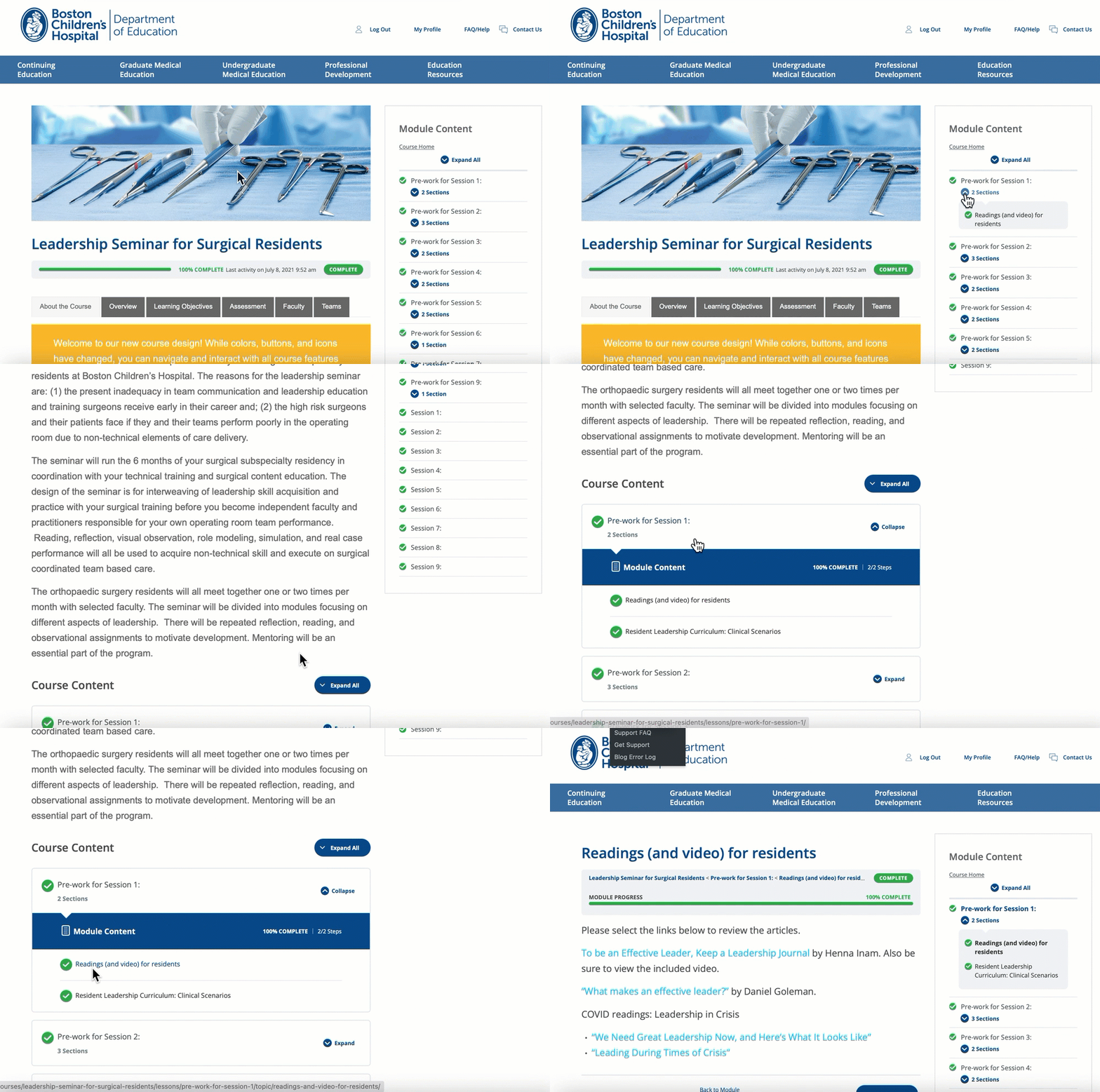
How do I navigate this course? There are two ways to access and navigate course content with the interactive table of contents: at the bottom of the main course page or in the sidebar on the right side of the page. Select the links in the table of contents to access the corresponding content. Depending on the course, access to content may be linear, in which case each content module or section can only be accessed if the prior ones are completed, or non-linear, in which case modules and sections can be accessed in any order. Use the breadcrumbs at the top of any course page to orient yourself within a course, or return to a previous course section or the main course page. How do I claim credit? If the course has been accredited, available credits will be displayed on the course home page. Select only those credits that apply to your profession, and click/tap “Apply Selection.” You may make your selection at any point while you are taking the course, or after you have completed it. How do I download a certificate? There are two ways to view/download your certificate: from within the course or from the course listing under your profile (select the document icon). In either case, you must have selected at least one available course credit type to generate a certificate. How do I view/print my transcript? You must be logged in to view your transcript. Select My Profile at the top of the page. If you do not see the transcript selector, be sure the Courses tab is selected. Select the type of credit and dates to include in your credit report. To include all credits from all time, leave the options blank. Select Download Transcript to view/download your transcript. Note each credit type in your transcripts starts a new page. How do I request a refund? Please email the CME Department to request a refund.How do navigate this course?
How do I claim credit for this course?
How do I download a certificate?
How do I view/print my transcript?
How do I request a refund?
View on Zencastr
Click Here to View Transcript
Miya Bernson-Leung 00:03
Hello and welcome to the Boston Children’s Hospital Clinical Pathways Podcast, a collaboration between the program for Patient Safety and Quality and the Center for Educational Excellence and Innovation. I’m your host, Miya Bernson-Leung, Medical Director of Continuing Education and a member of the Clinical Pathways Committee. Clinical pathways are educational reference tools developed by BCH clinicians based on current available evidence and local practice, which focus on the diagnosis and management of a wide variety of clinical conditions and allow discretion based on clinical judgment. You can access the clinical pathways library, including the pathway we will discuss in today’s episode, at clinical.pathways.childrenshospital.org, or on the BCH Clinical Pathways app for iOS or Android. In this podcast series, a team of moderators and I will interview clinical experts from Boston Children’s Hospital to take you behind the pathways. Why was the pathway developed, and what clinical need or practice problem is it trying to address? What are common knowledge gaps about the pathway’s topic and key takeaways for clinicians seeking to implement the pathway and provide safe, effective, and evidence based care to children. Each episode is accredited for continuing education credits for physicians, PAs, nurses, and pharmacists. To claim credit, go to dme.childrenshospital.org/clinicalpathwayspodcast. We hope you enjoy today’s episode. The moderators and speakers for today’s podcast have no relevant disclosures or financial conflicts of interest. Welcome back to the Clinical Pathways Podcast. This is your moderator, Miya Bernson-Leung, and today I am excited to be speaking about the pathway Vitamin D Deficiency. In the studio with us today we have Christina Jacobsen, the executive director of the Center for Skeletal Health, an attending physician in our divisions of Endocrinology and Genetics and Genomics, and an Assistant Professor of Pediatrics at Harvard Medical School. Christina, welcome.
Christina Jacobsen 02:04
Thank you so much for having me.
Miya Bernson-Leung 02:05
Thanks for being here. I’m looking forward to learning from you about this pathway. Could you start by just giving us an overall sense of what it’s all about. Who’s it for? What’s the intention of it?
Christina Jacobsen 02:15
Of course. So this pathway we started developing about eight years ago now, and it was actually done under my predecessor, Dr. Nina Ma. And the original intention of the pathway was specifically for the Division of Endocrinology. Many of our providers see patients with several different underlying conditions that affect vitamin D metabolism and affect bone health. And there were questions about which of these patients really need to be screened for vitamin D deficiency. Who are the patients who are at risk of vitamin D deficiency affecting their bone outcomes? And so there were questions that were raised on who needs to be tested for vitamin D deficiency, and who really is at risk and needs to be supplemented with vitamin D. And so that was why we developed the pathway originally. And then a couple of years ago, we were asked to really revise the pathway so that it would have broader application across the hospital and even for primary care practitioners, and could be used so that not every patient with vitamin D deficiency needed to be referred to endocrinology for us to see.
Miya Bernson-Leung 03:23
That’s wonderful. So really trying to empower a broad range of providers to be able to take care of kids’ bone health. And you list in the pathway a number of scenarios that are really important for people to be thinking about screening for vitamin D deficiency. And I’m curious if you could tell us more about some of those. What are some of the ones in particular that people might not immediately think of? What are the missed opportunities for screening for this?
Christina Jacobsen 03:46
There are very classic reasons why you might want to think about screening for vitamin D deficiency that I think come to everybody’s mind. So in my clinic, I focus on bone health. And so of course, you know you think about screening for vitamin D deficiency in patients who have fractures, in kids who have rickets, those are the obvious causes. But there are other things that people might not think about quite so obviously. And so some of those might be patients who are on certain medications. So for example, patients who are on steroids, who are at very high risk of having bone health issues. And that could be a child who has asthma, who needs multiple courses of steroids over a year, that patient is at high risk of having bone issues. Some of our patients who are on anti seizure medications, those do affect vitamin D metabolism, and they do need to be screened. And I will say that our neurology colleagues are very good about doing that, but those patients also need to be screened. Any patient who has a chronic inflammatory condition, patients who have Crohn’s disease, patients who have ulcerative colitis, patients who have some of the inflammatory arthritis conditions, they all need to be screened. Patients who have neuromuscular conditions. So all of our patients who have immobility due to neuromuscular conditions, Duchenne’s muscular dystrophy, spinal muscular atrophy. They are at very high risk of having bone issues because of their immobility, and they all need to be screened. All breastfed or partially breastfed infants need to receive 400 international units of vitamin D a day until they are weaned or are entirely formula fed, because breast milk contains very low levels of vitamin D, although it does contain adequate amounts of calcium, very bioavailable calcium, and those are the American Academy of Pediatric guidelines. So these are just a few that come to mind.
Miya Bernson-Leung 05:33
Well, that’s great. Thank you for the shout out to the neurologists. Listeners may know I am a neurologist, and we’ve had a big push, it was a big learning point for me to really be thinking about, you know, kids who are on anti-seizure medicines, or have some of these neurological conditions that might be at risk. It seems like it affects a really broad range of people to at least potentially be vitamin D deficient.
Christina Jacobsen 05:51
Absolutely. And you know, and then just for our primary care colleagues out there, you know, anyone who has very low dairy intake is going to be at high risk of being vitamin D deficient, because many dairy products are supplemented with vitamin D. And so why we don’t recommend that your average, healthy child coming into a primary care clinic needs to be screened, a child who’s getting less than three servings of dairy a day, and a serving includes eight ounces of milk, eight ounces of an alternate store bought milk that is vitamin D supplemented – so we’re talking about almond milk, soy milk, things like that – or an ounce of cheese. So this includes children who just don’t like dairy and aren’t getting enough dairy, or children who have a dairy allergy. Those kids all do need to be screened for vitamin D deficiency, and that is a fairly high percentage of children who come into my clinic. And I would imagine children who come into a primary care clinic as well.
Miya Bernson-Leung 06:47
Absolutely. Thank goodness. My two-year-old would live on cheese if he had the option.
Christina Jacobsen 06:51
[Laughs] Very true for most toddlers, but once they get into the teenage years, much less common.
Miya Bernson-Leung 06:57
I imagine. And what about – we’re, you know, in New England, sort of northern latitudes, don’t see a lot of sunshine for much of the year. I imagine that both increases the risk of being vitamin D deficient, but also that people might sort of brush off a low vitamin D level that they find on screening and just say, Oh, well, it’s just the end of winter in New England. How would you sort of respond to that? And what guidance would you give people seeing those low numbers for kids in our area?
Christina Jacobsen 07:23
So vitamin D is formed in our skin from the sun. So we do get vitamin D made from sun exposure. And it is true that people in the northern latitudes are more likely to be vitamin D deficient. We also know that in winter, our vitamin D levels fall by about four to five, depending, again, on where you are. But that’s true for the northern latitudes. So you do want to be careful about you know, if you see a vitamin D level of 10 – and again, we like to see vitamin D levels at least over 20 – so if you see a vitamin D level of 10 in the winter, you shouldn’t just say, Oh, it’s just winter. That’s still too low, and the patient does require supplementation. And just to give you an idea about the prevalence of vitamin D deficiency in New England, there was a famous study that was done years ago now where they took all comers, so pregnant women who were coming in healthy, pregnant women who were coming into Boston Medical Center, and just screened them for vitamin D deficiency. And about two thirds of them were vitamin D deficient. So it is relatively common amongst adults in Boston, and that just gives you an idea about how common it is.
Miya Bernson-Leung 08:36
Let’s circle back. You talked about how this pathway has been sort of in the works within your division for a while. How did you personally become involved with it, and what motivated you to be a part of the clinical pathway development for this topic?
Christina Jacobsen 08:50
I was asked to be part of it originally, because I am one of the bone physicians in the Division of Endocrinology, but it was actually a pleasure to be part of it. Vitamin D, I would say, is the most commonly prescribed medicine in my practice. It is definitely the thing that I prescribe the most, and it’s probably the most commonly asked about medicine from my colleagues. So I am more than happy to provide guidance on it to my colleagues, and it was certainly a pleasure to work on this, both with the initial preparation of the pathway and then also in the revision. It’s certainly something that I feel very strongly that all physicians should know about, and especially for primary care physicians, I’m very happy to help provide guidance for them.
Miya Bernson-Leung 09:35
That’s great. And the pathway has a beautiful sort of flow chart for dosing of supplementation, and duration of supplementation, and when to check and recheck. And so we would refer people to the clinical pathways library to be able to see that in more detail. I’m curious if there are particular pearls or pitfalls, things that you’ve run into, both for supplementation itself, and then I imagine that you see people who may have challenges with adherence to the supplementation with their children. So what recommendations do you give for them?
Christina Jacobsen 10:05
First, for providers, I would just say that the amount of vitamin D that a patient needs is actually kind of controversial in the endocrine world. So in general, it is agreed that having a level over 20 nanograms per milliliter is adequate for bone health. You probably are not at risk of having rickets unless you’re below 20 nanograms per milliliter. There is some evidence that having a level over 30 nanograms per milliliter is actually even better for your bones. So certainly in my practice, when you have patients who are at risk for bone issues, we target a level over 30 nanograms. The level between 20 and 30 nanograms is generally considered insufficient. And if you order a test of 25-hydroxy vitamin D in our lab, and it is between 20 and 30, you will get a report back that says that’s insufficient. So for patients who are at risk of bone issues or skeletal health issues, and that is who we are recommending being treated and tested in our CBG, we recommend that everybody be over 30 nanograms per milliliter. Patients who are under 20 nanograms per milliliter, when they are tested, they are definitely at higher risk of developing rickets and other bone complications. In our clinical practice guidelines, you will see that patients who are under 12 nanograms per milliliter, they are at very high risk of developing something called hungry bone syndrome, and that’s a condition that when you start them on vitamin D, they are also total body calcium depleted. So basically, their vitamin D has been so low for so long that they have been unable to absorb calcium in their diet, and they have taken calcium out of their bones to maintain a normal calcium level in their bloodstream. And because of that, their bones are calcium depleted. And as soon as you give them vitamin D, all the calcium in their body is going to go right back into their bones, and this can cause low calcium levels. So it’s very important that as soon as you start the vitamin D, you replace calcium at the same time, or they will develop low calcium levels. We make that very clear in our pathway to prevent the hypocalcemia that can occur when you start vitamin D. Patients who are over that 12 nanograms per milliliter, you don’t need to worry about that as much, although, certainly if patients are not getting enough calcium in their diet, we would recommend giving them calcium as well, and that is the guideline is in our pathway. So those are those kind of pitfalls that we worry about for providers. Just a little bit about- for patients who have difficulty taking supplements. This, of course, is a huge issue, and I get asked all the time by patients, is there a certain type of supplement you recommend? Does it matter what form we take it in, pills, capsules, chewables? And I say, no. If there is a type that your child likes and will take every day, that is the type that you should take. There have been studies on this about, does it matter if you take ergocalciferol or cholecalciferol – ergocalciferol is the vitamin D that comes from animals, cholecalciferol is the vitamin D that comes from plants. Most of what you can get over the counter anymore is ergocalciferol. Some studies suggest that perhaps ergocalciferol is a little bit better absorbed. But honestly, in the long run, it really doesn’t matter. So if there’s a form that your child likes, if they prefer the gummies, if they’re fine with swallowing tiny little pills, most of the vitamin D is a tiny little gel capsule. Whatever they will take is fine. The other thing about vitamin D is it doesn’t really matter if you take it every day, or if you take it two pills every other day, or if you take seven pills once a week. It pretty much is equally absorbed, assuming that you have good absorption. So for some of my patients who have liver disease or who have malabsorption, they do better to take it every day, but for most healthy patients, it doesn’t really matter. So if you miss a pill one day, take two the next day. If you miss two pills, take three the following day. So I tell patients, you can totally do that with vitamin D. Calcium does not work that way. There are limits to how much calcium you can absorb, so calcium has to be taken separately, but vitamin D is very forgiving. So again, I tell my patients, whatever you like, that’s what you should take. And again, if you miss a pill one day, you can take two the next day. Or some patients do better just taking it all once a week. That’s totally fine.
Miya Bernson-Leung 14:35
It’s great to hear that there’s so much flexibility to just do what works. It’s always nice when we can say that to people, just do what works.
Christina Jacobsen 14:40
Exactly. And so I try to make it as simple for patients as possible, just so that they get it in.
Miya Bernson-Leung 14:45
That’s wonderful. Following up on your previous recommendations, which are so helpful about the flexibility around dosing. As a new mom, not that I was ever sleep deprived and forgot to give my baby vitamin D, but for those who might be listening who are – can you do the same thing with a baby, where you can double up a dose the second day if you’ve forgotten it, or something like that, or what’s the situation like for that?
Christina Jacobsen 15:09
You can, you absolutely could, although I would not recommend it with an infant, I would probably just go ahead and give the standard dose for an infant the next day. The reason being, it’s not going to be a huge issue if you miss one day for a baby. And the risk of overdosing in a baby, while still extremely low, is higher given their size. I would just go ahead and give a single dose the next day.
Miya Bernson-Leung 15:31
Got it, so just try and get back on your streak.
Christina Jacobsen 15:34
Yeah.
Miya Bernson-Leung 15:34
Okay. What clinical need or practice gaps have you seen that you’re really hoping that this pathway will address, especially as we release it to a wider audience?
Christina Jacobsen 15:43
I do think that not every patient with vitamin D deficiency needs to be referred to a specialist. I think a lot of this care can be provided by the patient’s primary care physician, or the patient’s sub-specialty provider who is sending the vitamin D level can treat it in their clinic. So for example, the neurologists are really good about doing this. The gastroenterologists are also very good about seeing this and treating it for their patients who have chronic inflammatory disease or malabsorption. More and more, our sub-specialty colleagues are excellent at treating this. Not- the only patients who really need to be referred to endocrinology are patients who you already tried to treat them and you’re having difficulty getting their levels up. In that case, we are more than happy to kind of help you treat the patients. The other patients who sometimes need sub-specialty care in endocrinology are patients who have secondary hyperparathyroidism from their vitamin D deficiency, or true rickets. So the patients where you see x-ray findings of rickets, bowed legs, things like that, that often goes along with a secondary hyperparathyroidism, the high PTH levels. Endocrine’s happy to get involved in those cases. We are more than happy to sort of help treat those patients. But a lot of this with the pathway, the guidelines are all laid out, we are not going to do anything different in endocrinology than what’s laid out here, and so our goal is to prevent another visit, another copay, all of these things for these patients, and allow them to be treated in their medical home, if you will.
Miya Bernson-Leung 17:17
That’s great to know that there’s so much that those medical home providers can do, at least, to sort of start the process and see how, see how it goes. And is there any new research or recent guidelines that have come out that you’d like to make sure that people are aware of?
Christina Jacobsen 17:30
I would say some of the newer research that’s being done on Vitamin D has been looking at things like vitamin D binding protein. So, for example, vitamin D, when it is in the circulation, exists in multiple forms. So, most vitamin D is actually bound to a specific binding protein, and the active form of vitamin D is what’s not bound to the protein, but is free. And different people have different levels of vitamin D binding protein. So when we actually measure vitamin D itself, what we measure- sometimes people will look like they have very low levels of vitamin D, but what we’re measuring is affected by what’s not bound to the vitamin D binding protein. So patients who have lower levels of vitamin D binding protein will look like they have lower levels of vitamin D, but their levels of free vitamin D is actually equivalent to somebody who has higher levels of vitamin D binding protein. And again, we don’t have a test that we routinely measure vitamin D binding protein. So there are some patients that we see in our clinic where we have a very, very difficult time getting their vitamin D levels up. And it’s very easy to think maybe these patients aren’t taking their vitamin D supplements that we tell them, and the family assures us that they are. And probably what’s going on with those patients is they just have lower levels of vitamin D binding protein. But we don’t have a routine lab test that we send for those patients, and trying to figure out which of those patients are which and- this is a rare condition. It’s not something we commonly see. But every endocrinologist has a few of those patients, and we look at them and say, this is probably a vitamin D binding protein issue. Trying to sort out who those patients are, and perhaps in the future, having more testing for that and genetic testing could be helpful going forward.
Miya Bernson-Leung 19:15
Very interesting. We’ll have to get you back in a couple of years, and you can give us a report on updates in vitamin D binding protein research. Tell me about the relationship between skin color and vitamin D deficiency, and also vitamin D screening. Are there kids with different melanin levels in their skin who maybe people aren’t thinking of screening them as often as they should be? And what should we be telling people about that?
Christina Jacobsen 19:40
That’s a great question. There is no specific guidance on screening patients with different skin colors differently for vitamin D deficiency, and we do not have any recommendations per that. We just recommend treating patients based on our guidelines, as per disease status and environmental conditions such as dairy intake, and those are the only recommendations. There really hasn’t been a lot of studies looking at where patients are located, as far as latitude and skin color that I am aware of, and looking at vitamin D levels compared to that. We would just recommend going by conditions and environmental and nutrition intake.
Miya Bernson-Leung 20:29
Okay, so just follow the guidelines, and nobody needs to be treated any differently.
Christina Jacobsen 20:33
That’s exactly right.
Miya Bernson-Leung 20:34
Is there anything else that you’d like our audience to know about this topic?
Christina Jacobsen 20:37
I would say that people worry all the time about overdosing on vitamin D, getting too much vitamin D. That is possible to do. And if you take too much vitamin D, you can develop high levels of calcium, hypercalcemia. It is very, very hard to overdose on vitamin D. You have to try to get too much vitamin D. So we have stories of patients who accidentally – or sometimes intentionally, because they taste like candy – you know, children will get into a jar of vitamin D gummies and eat them just on a chance basis. They’re, you know, left someplace where a child can get into them. Even that kind of situation on a one time basis, they don’t overdose on vitamin D. So it has to be kind of a sustained incidence where there has been a mistake in the dosage, or something like that, where somebody has given super high doses of vitamin D, to really overdose on vitamin D. I can count on one hand the number of times that we have seen a child who has been accidentally given too high a dose of vitamin D and has truly become toxic on vitamin D. So while it is possible, it is very rare, and you can actually give relatively high doses of vitamin D before that truly becomes a major issue. So while that’s a concern, and it is something that providers should always keep in the back of their mind, it is relatively rare.
Miya Bernson-Leung 22:04
Okay, good to know not to worry about it too much. Our last question, if you don’t mind answering, is, if you could create or commission a pathway about absolutely anything in the world, something that you would love to have more guidance on, what would it be?
Christina Jacobsen 22:17
I thought about this, and I was still a little bit focused on things at the hospital, and if I had my wish, I would love a pathway that was created by the NICU nurses on how to swaddle an infant, because they are incredibly good at that. And they always get them wrapped so tightly and cozily. And I am never able to do it as well as them. And I go to examine an infant and have to try to wrap them back up afterwards, and they always have to come along behind me and redo it, because I always have an arm free or something loose, and the baby immediately kicks the leg loose, and I can never do it as well. And that would be incredibly useful knowledge for me, both in the hospital and in home life.
Miya Bernson-Leung 22:57
I think a lot of us who see babies in the NICU and also a lot of new parents would probably appreciate that as well, completely agree. Well, Christina, thank you so much for joining us today. I learned so much from you, lots of great tips and tricks, and I hope that everyone will join us for the next episode of the clinical pathways podcast. Thanks for listening to this episode of the Clinical Pathways Podcast from Boston Children’s Hospital. Please leave us a review, like, and subscribe wherever you get your podcasts. A reminder to all physicians, PAs, nurses, and pharmacists: to claim your continuing education credits for listening to today’s episode, please visit dme.childrenshospital.org/clinicalpathwayspodcast and complete the short survey attached to this episode. The content of this episode and the related pathway was developed by clinicians at Boston Children’s Hospital. Any treatment and/or medication recommendations within the pathway is provided for educational reference only. It is not intended as medical advice for individual patient care. Decisions about evaluation, diagnosis and/or treatment are the responsibility of the patient’s treating clinician and should always be tailored to the individual patient’s clinical care needs. For more information about the clinical pathways or this podcast series, email pathways@childrens.harvard.edu. You can also find the Center for Educational Excellence and Innovation on LinkedIn, at linkedin.com/showcase/bostonchildrensceei.