

Lead Poisoning – Clinical Pathways Podcast
Current Status
Price
Get Started
Course Credit
The following credits are available for this course:
| AMA PRA Category 1 Credits™ (MD, DO, NP, PA) | 0.5 hours |
| Contact Hours (Nurse) | 0.5 hours |
| American Academy of Physician Assistants (AAPA) Category 1 CME Credits | 0.5 hours |
| CPE Credits (Pharmacist) | 0.5 hours |
| General Attendance | 0.5 hours |
(Note: a course evaluation is required to receive credit for this course.)
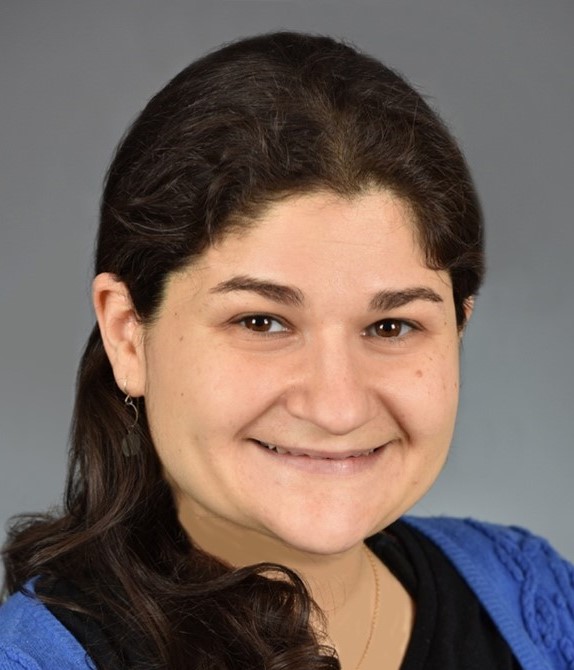
Marissa Hauptman, MD, MPH, FAAP
Co-Director, Region 1 New England Pediatric Environmental Health Specialty Unit (PEHSU)
Co-Director, Pediatric Environmental Health Center, Boston Children’s Hospital
Pediatrician, Children’s Hospital Primary Care Center (CHPCC), Boston Children’s Hospital
Assistant Professor of Pediatrics, Harvard Medical School
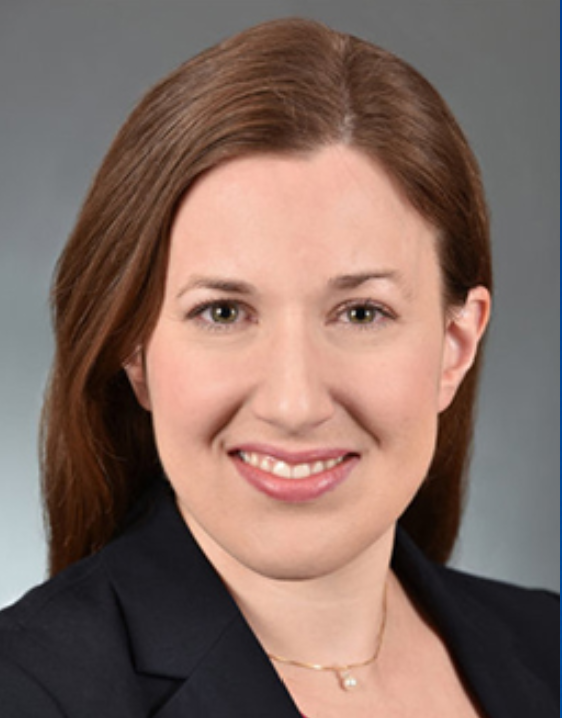
Moderator: Miya Bernson-Leung, MD, EdM
Program Director, Child Neurology Residency Training Program, Boston Children’s Hospital
Medical Director of Continuing Education, Center for Educational Excellence and Innovation, Boston Children’s Hospital
Assistant Professor of Neurology, Harvard Medical School
This episode of the Boston Children’s Hospital Clinical Pathways Podcast explores the Lead Poisoning clinical pathway, emphasizing prevention, early detection, and coordinated management of childhood lead exposure. The discussion highlights populations at highest risk, the intersection of housing, nutrition, and environmental justice, and the critical role of partnerships between clinicians, families, and public health systems. The pathway is designed to empower clinicians to navigate screening requirements, support families through complex follow-up, and reduce the neurodevelopmental impact of lead exposure.
Clinical Pathways are educational reference tools developed by Boston Children’s Hospital clinicians which focus on the diagnosis and management of a wide variety of clinical conditions based on up-to-date evidence and expert practice. On this show, host Miya Bernson-Leung, MD, EdM, Medical Director of Continuing Education and a member of the Clinical Pathways Advisory Committee, interviews clinical experts to take you behind each pathway, discussing why the pathway was developed and key takeaways for clinicians seeking to implement the pathway and provide safe, effective, evidence-based care to children. You can find the full library at https://clinical.pathways.childrenshospital.org/.
Any treatment and/or medication recommendations within the pathway is provided for educational reference only, it is not intended as medical advice for individual patient care. Decisions about evaluation, diagnosis, and/or treatment are the responsibility of the patient’s treating clinician and should always be tailored to the individual patient’s clinical care needs.
Learning Objectives:
At the conclusion of this educational program, learners will be able to:
- Identify evidence-based recommendations for the screening, testing, and outpatient management of childhood lead exposure, including age-based screening guidelines and risk factors that warrant additional testing.
- Apply a multidisciplinary, public health–informed approach to caring for children with elevated blood lead levels, incorporating environmental mitigation, nutritional support, developmental surveillance, and collaboration with public health agencies.

In support of improving patient care, Boston Children’s Hospital is jointly accredited by the Accreditation Council for Continuing Medical Education (ACCME), the Accreditation Council for Pharmacy Education (ACPE), and the American Nurses Credentialing Center (ANCC), to provide continuing education for the healthcare team.
Physician
Boston Children’s Hospital designates this live activity for a maximum of 0.5 AMA PRA Category 1 Credits ™. Physicians should claim only credit commensurate with the extent of their participation in this activity.
Nurse
Boston Children’s Hospital designates this activity for 0.5 contact hours for nurses. Nurses should only claim credit commensurate with the extent of their participation in the activity.
Physician Assistant
Boston Children’s Hospital has been authorized by the American Academy of PAs (AAPA) to award AAPA Category 1 CME credits for activities planned in accordance with AAPA CME Criteria. This activity is designated for 0.5 AAPA Category 1 CME credits. PAs should only claim credit commensurate with the extent of their participation.
Pharmacy
This activity carries a maximum of 0.5 contact hours. Pharmacists should only claim credit commensurate with the extent of their participation in the activity.
Disclosures
Boston Children’s Hospital adheres to all ACCME Essential Areas, Standards, and Policies. It is Boston Children’s policy that those who have influenced the content of a CME activity (e.g. planners, faculty, authors, reviewers and others) disclose all relevant financial relationships with commercial entities so that Boston Children’s may identify and resolve any conflicts of interest prior to the activity. These disclosures will be provided in the activity materials along with disclosure of any commercial support received for the activity. Additionally, faculty members have been instructed to disclose any limitations of data and unlabeled or investigational uses of products during their presentations.
The following planners, speakers, and content reviewers, on behalf of themselves, have reported the following relevant financial relationships with any entity producing, marketing, reselling, or distributing health care goods or services consumed by, or used on patients:
Marissa Hauptman, MD, MPH, FAAP
None
Miya Bernson-Leung, MD, EdM
None
Please see the FAQs below for common questions about how to work through a course. If you have a question or issue that is not addressed in the FAQ, please use this form to submit a help request, or if your issue is urgent, call the CME office at: 617-919-9908.
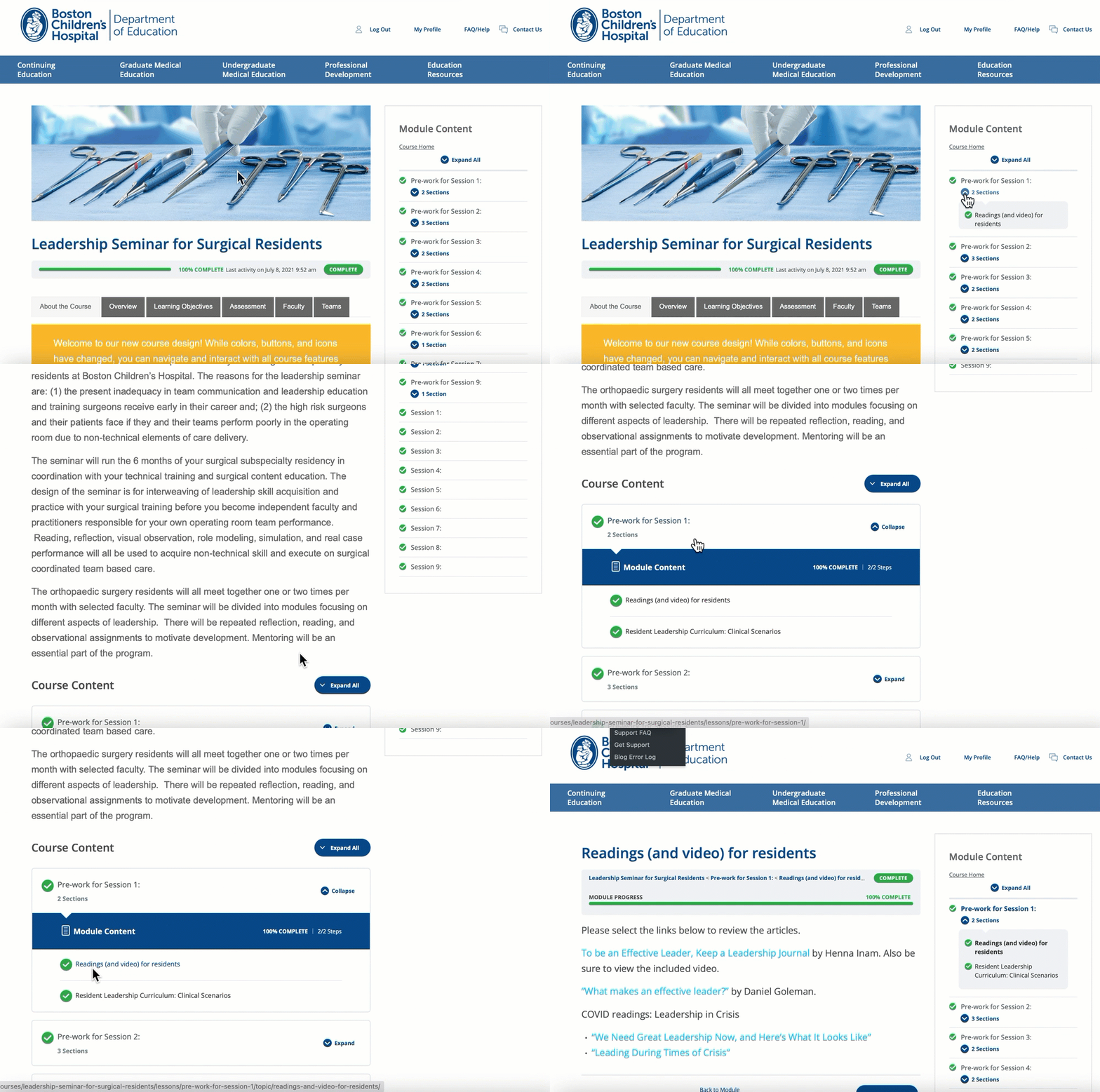
How do I navigate this course? There are two ways to access and navigate course content with the interactive table of contents: at the bottom of the main course page or in the sidebar on the right side of the page. Select the links in the table of contents to access the corresponding content. Depending on the course, access to content may be linear, in which case each content module or section can only be accessed if the prior ones are completed, or non-linear, in which case modules and sections can be accessed in any order. Use the breadcrumbs at the top of any course page to orient yourself within a course, or return to a previous course section or the main course page. How do I claim credit? If the course has been accredited, available credits will be displayed on the course home page. Select only those credits that apply to your profession, and click/tap “Apply Selection.” You may make your selection at any point while you are taking the course, or after you have completed it. How do I download a certificate? There are two ways to view/download your certificate: from within the course or from the course listing under your profile (select the document icon). In either case, you must have selected at least one available course credit type to generate a certificate. How do I view/print my transcript? You must be logged in to view your transcript. Select My Profile at the top of the page. If you do not see the transcript selector, be sure the Courses tab is selected. Select the type of credit and dates to include in your credit report. To include all credits from all time, leave the options blank. Select Download Transcript to view/download your transcript. Note each credit type in your transcripts starts a new page. How do I request a refund? Please email the CME Department to request a refund.How do navigate this course?
How do I claim credit for this course?
How do I download a certificate?
How do I view/print my transcript?
How do I request a refund?
View on Zencastr
Click Here to View Transcript
Miya Bernson-Leung 00:03
Hello and welcome to the Boston Children’s Hospital Clinical Pathways Podcast, a collaboration between the program for Patient Safety and Quality and the Center for Educational Excellence and Innovation. I’m your host, Miya Bernson-Leung, Medical Director of Continuing Education and a member of the Clinical Pathways Committee. Clinical pathways are educational reference tools developed by BCH clinicians based on current available evidence and local practice, which focus on the diagnosis and management of a wide variety of clinical conditions and allow discretion based on clinical judgment. You can access the clinical pathways library, including the pathway we will discuss in today’s episode, at clinical.pathways.childrenshospital.org, or on the BCH Clinical Pathways app for iOS or Android. In this podcast series, a team of moderators and I will interview clinical experts from Boston Children’s Hospital to take you behind the pathways. Why was the pathway developed, and what clinical need or practice problem is it trying to address? What are common knowledge gaps about the pathway’s topic and key takeaways for clinicians seeking to implement the pathway and provide safe, effective, and evidence based care to children. Each episode is accredited for continuing education credits for physicians, PAs, nurses, and pharmacists. To claim credit, go to dme.childrenshospital.org/clinicalpathwayspodcast. We hope you enjoy today’s episode. The moderators and speakers for today’s podcast have no relevant disclosures or financial conflicts of interest. Welcome back to another episode of the Clinical Pathways Podcast. Today, we will be speaking about lead poisoning. This is your host, Miya Bernson-Leung, and in the studio with me, I have Marissa Hauptman. She is the Chief Medical Advisor at the Massachusetts Department of Public Health Bureau of Climate and Environmental Health. She is the co-director of the Region One New England Pediatric Environmental Health Specialty Unit, the co-director of the Pediatric Environmental Health Center, and a pediatrician in the Children’s Hospital Primary Care Center, as well as an Assistant Professor of Pediatrics at Harvard Medical School. Hi Marissa.
Marissa Hauptman 02:14
Hi Miya. How are you?
Miya Bernson-Leung 02:16
Good, thanks so much for being here. So very important topic, especially for those of us living in Massachusetts or the areas around. Can you give us a big picture overview of what is this pathway all about? Who’s it for? Who’s included?
Marissa Hauptman 02:30
Thanks so much for having me to discuss this topic. I helped lead this pathway when I was a fellow, close to a decade ago at this point, and the goal of this clinical pathway is to develop an evidence-based guideline that focuses on the screening, testing and multidisciplinary management of childhood lead poisoning in order to protect those most vulnerable to the deleterious effects of lead exposure.
Miya Bernson-Leung 02:50
Can you tell us more about sort of the genesis of the pathway? How did you become involved in this particular topic, and what led you to want to create a pathway for it?
Marissa Hauptman 03:00
Started to learn about the importance of healthy housing and lead poisoning in children, actually, prior to going to medical school, I did graduate work in public health in Rhode Island, and at the time, they had received some funding to develop a primary lead poisoning prevention program in the state, and I served on the Attorney General’s commission lead paint advisory and provided the analytical support to try to develop this primary prevention program that leveraged geospatial analysis, decade of childhood lead poisoning data from the Department of Health in Rhode Island, to design a program that could mitigate and improve the housing stock in certain communities in Rhode Island prior to children ever having to be exposed to lead hazards. And it was a really wonderful, hopeful time in Rhode Island, where they had hoped that they would get additional funding through some of the pursuits that the Attorney General was taking, and that at the very least, they had a significant multi-million dollar funding to invest in communities to prevent lead exposure. And so I always wanted to become a pediatrician, but this really showed me the importance of public health and that intersection with pediatric medicine, and how much health we can improve and developmental delays that we can prevent by thinking more upstream. And so that has sort of been a pillar for me throughout my career, and I then went into medical school and pediatrics residency here at Boston Children’s and Boston Medical Center, and then did a pediatric environmental medicine fellowship to learn how to take care of children if we’re not able to prevent lead exposure, and have been on that pathway ever since to address these environmental injustices that impact our patients and our children.
Miya Bernson-Leung 04:38
Well, it sounds like an amazing journey. You’ve been doing so much for this population. And of course, as a neurologist, I have to express my gratitude for everything you’re doing for children’s neurodevelopment. So thank you for that. And I’m really hopeful that this pathway will just further that work for people. You mentioned time in Rhode Island, and now you’re here in Massachusetts, and I think our listeners probably come from a variety of places across our region, as well as beyond. Who are the communities that should be really thinking about lead exposure, especially you mentioned healthy homes?
Marissa Hauptman 05:11
Yeah, it’s a great question. So we designed this pathway initially for pediatricians and healthcare professionals in Massachusetts, and like some things in medicine, there’s significant variability that exists nationally, state by state, in response to screening, testing and management of lead exposure and elevated blood lead levels. And so the pathway as it currently exists is anchored in the Massachusetts regulations of when to test a child for lead exposure. And so in Massachusetts, the Massachusetts Department of Public Health recommends that you test at one, two and three, and four if you live in a high risk community. And I encourage listeners, as well as users of this pathway, to consult their own state guidance around this, and if that doesn’t exist, to their other resources, from the American Academy of Pediatrics to the CDC, to guide their clinical management of lead testing.
Miya Bernson-Leung 06:02
Got it. Thank you. Marissa, could you tell us more about the inclusion criteria for lead screening, and especially the specific age ranges in different communities? Do you think that some children are being tested for lead who don’t need it, or are children being missed, or both?
Marissa Hauptman 06:16
As I mentioned before, that this pathway currently is based on Massachusetts guidance that’s developed by the Department of Public Health in terms of when to test children for lead exposure. And so we know in Massachusetts that we’re doing better and better in terms of our lead testing rates. So at a recent annual report by the Massachusetts Department of Health showed that we’re at 73% statewide, and that is increased from overcoming enduring pandemic era declines and has reached the highest level since 2017. But we also know that lead poisoning still persists in our population, and that too, we’re doing better. Most recently in that 2023 report showed that now 2.5 per 1000 children have lead poisoning, as defined by the Massachusetts Department of Health, of greater than 10 micrograms per deciliter, and this is a reduction from 2.8 in 2022 and is the lowest prevalence to date. However, we know a lot about childhood lead poisoning and who is most at risk. And so in Massachusetts, the guidance is that at nine to 12 months, or one, two, three, and four, if you live in one of these 16 high risk communities in Massachusetts, the Massachusetts Department of Health recommends that clinicians test all children for lead exposure, and this has to do with risk factors in Massachusetts, where we have one of the oldest housing supply in the nation, and we know that children are still at risk from these legacy sources of lead. I think also other factors to consider as a clinician in testing is if there’s a sibling with an elevated blood lead level, and as well as if a patient comes to you and they or you have concern for lead exposure based on potentially pica behaviors or unusual oral behaviors. Sometimes, children with autism have been shown to have elevated lead exposures from just ways that they may interact with their environment, and potentially persistent pica behaviors. If there’s any symptoms in the patient, like persistent constipation or or other factors that suggest that it may be helpful to just identify if lead is contributing to these presentations, and also based on parental occupations. If parents work in lead fields like construction or or have hobbies that may expose them to lead, if there’s ongoing renovations in the home, as well as like we spoke about, if they’re a recently arrived immigrant or refugee, both potentially from exposures from their home country, but also maybe having inadequate access to safe housing here, may all exacerbate a risk. And so you know, certainly these are just meant to be a framework and to use your medical expertise to guide your clinical care.
Miya Bernson-Leung 08:48
No, that makes a lot of sense, and thanks for highlighting some of the particular groups and demographics that might be at higher risk for lead exposure and why, how those circumstances might have contributed to that. And if listeners are interested, I’d also refer them to- we have a separate episode interviewing the creator of the pathway on newly arrived immigrant children. So if you’d like to learn more about how to support newly arrived families, I would refer you to that pathway in that episode as well.
Marissa Hauptman 09:16
Wonderful.
Miya Bernson-Leung 09:16
You’ve started to allude to this already, but what are some of the particular practice problems, or even knowledge gaps or pitfalls, that you’re hoping that this pathway will be able to help providers address?
Marissa Hauptman 09:31
On a high level, my hope is that it helps pediatricians and other clinicians feel empowered to both support their patients and their families in preventing lead exposure, as well as if a child is identified as having lead exposure, navigate that public health and medicine partnership well and seamlessly. And so I think sometimes that can be challenging to sort of know exactly how to outreach to departments of public health and how to advocate for your patients and how to support them in getting early intervention services and these kinds of things. So my hope is that this sort of brings all of those resources into one sphere, to think about the medical management, but also sort of that navigating to different agencies.
Miya Bernson-Leung 10:15
And I’ll encourage anyone who’s listening to the podcast right now but doesn’t have the pathway in front of them to definitely refer to that within the BCH Clinical Pathways Library, there are a lot of link outs to different resources, both those specifically relevant to Massachusetts and beyond, about different aspects of all of the things that Marissa is talking about in terms of patient education and connecting with various different resources and agencies, so thank you for collating all of that together in one place. You know, related to that, I think the outpatient management of these elevated levels sounds really complex in terms of, there’s nutritional interventions, repeat screening, environmental mitigation. What are some of the barriers that you’ve seen to people being able to navigate that? And do you have any advice for primary care practices in navigating these situations with their families?
Marissa Hauptman 11:06
This guide is aimed to help strengthen that partnership between patients, clinicians and public health agencies in addressing preventing and the response of lead exposure and childhood lead poisoning. I think a few things; one, that the primary care pediatrician doesn’t have to do it all, that in Massachusetts and many states throughout New England, there are really incredible state Department of Public Health childhood lead poisoning prevention programs that can support your patients in helping to reduce lead exposures in their home, providing lead- really local lead education resources that may be helpful to your patients, helping them navigate some of the legal intersections with childhood lead poisoning and home ownership that may exist in terms of mitigating lead hazards in the home and addressing them and so definitely reaching out to those state partners. Also just to highlight that Miya had mentioned that I’m the co-director for the Pediatric Environmental Health Specialty Unit here in New England and across the nation, the PEHSU network is comprised of clinical experts in addressing childhood and reproductive environmental health exposures in each of the HHS administrative regions. And so if you want further expertise in this, can certainly reach out to your regional PEHSU at www.pehsu.net, also a plug for the regional poison control centers that can be reached at 1-800-222-1222 to help guide you in the clinical management of child, child lead poisoning.
Miya Bernson-Leung 12:32
Is there any new research or recent guidelines or other sort of hot off the presses things that you would want to make sure that our listeners know about?
Marissa Hauptman 12:42
Yeah, so decades of public health research have demonstrated that there’s really no safe lead level of lead in the body and for the developing brain. And we know this, we’re not able to identify a safe threshold for which we don’t see any developmental impact. However, we also know, as the paradigm of toxicology, that the dose as well as the duration matter. And I think both of these things are true, that the importance of getting lead out of our environment is paramount. Getting it out of our housing supply, our water sources, making our consumer products safer are all incredibly important to reducing the burden of lead exposure on next generations. However, children are resilient, and that the dose and the duration matter, and so really trying to support families that may have identification of a lead exposure to getting them the neurodevelopmental supports that that child needs. So there’s a really powerful article a few years back in JAMA Pediatrics by Jeanette Stingone, and that highlighted the importance of early intervention for children with lead exposure, and that that is helpful in reducing the impact of that lead exposure, and that focusing on all the other things that we know as pediatricians to help in neurodevelopment, so less screen time, more sort of positive interactions, and all the ways that we’re able to support early childhood education and development is critical, and I think lead is something we can measure in the blood, but all those other things we can’t, and so trying to sort of when talking to a patient in front of you, or a family in front of you that may be dealing with lead poisoning or lead exposure, to really hold that as a pillar of the conversation.
Miya Bernson-Leung 14:17
That makes a lot of sense, and maybe dovetails with something else that I wanted to ask you about. So you mentioned some of the consumer exposures, toys and things like that, and then also the pathway, gives some information about screening for certain exposures to products that could be from the families’ countries or cultures of origin, and I imagine it could be really difficult to be having those conversations with families, and for them to think that something within their home environment may be harming their children. And so I’m wondering if you have advice for navigating that with sensitivity.
Marissa Hauptman 14:48
Thank you for that incredibly important question, and one that is very close to my heart, and how I think about caring for patients with lead exposure. In clinic, each week, we see patients of all different backgrounds and who suffer from lead exposure from different sources. And I think what I try to remind all families is that there’s not a part of the world that I know of that is immune from lead sources and lead exposure and and sometimes those sources are disproportionate in different products. But where we call home, whether that’s sort of the physical building where we live, as well as, sort of where your family grew up, is really close to, I think, everyone’s hearts and can be very hard when we learn that something in our home has the potential of making us sick. And so I think this goes to addressing lead based paint sources. And you know, lead, unfortunately, is invisible. And so sometimes that can sort of be very stressful when you learn that the paint in your home is making, you know, has the potential to make your child sick. And similarly, for products that maybe are brought from abroad, where lead may be put into these products far upstream from where you purchase them, can also sort of be very stressful. And, and so trying to sort of recognize that none of us are immune from sort of environmental exposures in our environments, and the importance of trying to make work together and with policy and other partnerships to make the world where our children live, learn and play as safe as possible. And I think really that medical partnership, as well as public health partnership and that alliance with families is really critical in reducing exposures.
Miya Bernson-Leung 16:23
What else would you like our audience to know about this topic?
Marissa Hauptman 16:26
I think in crafting this pathway, I think we tried to provide information of what to do at different levels and different severities of lead exposure. And page two of the pathway sort of shows that this pathway is primarily meant for outpatient or ED clinicians, and we stopped short of sort of providing details around chelation therapy and dosages for that, as we really wanted to encourage clinicians to make sure that they are caring for these patients in consultation and partnership with medical experts in this field. The other interesting factor that comes up a lot is around the relationship between iron deficiency and nutritional deficiency and lead levels. And we know that lead is absorbed more from the GI tract in the presence of iron deficiency, so both of them are absorbed by the divalent metal transporter. And so if you’re iron deficient, which many one and two year olds are, you’re going to absorb a little bit more lead from your GI tract. And so if you supplement with iron, it doesn’t help the lead be removed any faster, but it may provide a little bit of competitive inhibition for absorption. And so, that’s something that a lot of pediatricians will do as a first line, and something often we test in routine screening for lead and hemoglobin together, and that can be super helpful in thinking about exacerbating factors for lead absorption.
Miya Bernson-Leung 17:48
Got it. Is there anything else that pediatricians should be thinking about, sort of in addition to the number that you get on the test, like iron levels or other things nutritionally, or things that can be modified while you’re trying to work on the lead exposure itself?
Marissa Hauptman 18:05
What I tell families is that when they do identify a lead exposure, is really trying to identify what we’re going to do from here to both reduce the dose of the lead exposure as well as reduce- shorten the duration that a child is exposed. So in Massachusetts, if a child has lead level greater than 10, they’re required to have a home inspection to identify lead hazards and there are resources and to help have that lead identification in partnership with your local Board of Health or at lower levels than 10. But I think trying to ensure the family knows that there are lots of partnerships that exist to help reduce this exposure and and lots of laws that try to prevent lead exposure in the first place. And so I’m hopeful throughout my career that will continue to move that needle and make our housing and our schools safer to children and pregnant individuals.
Miya Bernson-Leung 18:59
Love that. You mentioned the schools, and I think that’s certainly another source of big worry for parents and caregivers. You know, is this place that I’m sending my child off to, going to physically make them ill in some way, and the, you know, drinking fountains or whatever it is, how big of a risk and exposure is that? And what is your sort of general advice for families about areas that are outside of their direct control, because it’s not within their home?
Marissa Hauptman 19:23
Trying to reduce lead exposures from all sources is important. So I think you know, certainly, if you own your home, having a lead inspection done to understand the status of your own home from lead based paint hazards, testing your water supply, and even your soil can be helpful to knowing where the lead exposure in your own home environment may be. In Massachusetts, landlords have to disclose the status of your home, whether there are lead hazards, there are no lead hazards, or they don’t know the lead status. So lead based paint was phased out in 1978 so certainly homes that were built after that are safer and in Massachusetts, I know that child care settings, early child care settings, are required to have a lead inspection, but it’s more than okay to ask as you’re pursuing child care options about the status of lead in in that environment, whether that’s a family based home daycare or a center based, I think being aware of the status of that environment. I think certainly reducing all sources of lead exposure is important. In Massachusetts, we know that children are most exposed from legacy sources of lead based paint hazards, and certainly those like less than one may be disproportionately exposed through water sources if the water is contaminated. I personally, as a clinician, worry a little bit less about school-age children who may have one sip out of a water fountain in a given day. And I think thinking through sort of the school environments is important, and doing what you can as a resident to advocate for safer school environments, and partnering with your local boards of health or state departments of help to advocate for that. If any other additional resources are needed, can also check out our website at www.childrenshospital.org/pehc, and there’s a lead section within the patient resources that has an educational resource that we developed called LeadRx that hopefully provides tailored information to help your patients address lead testing in their homes, temporary mitigation measures, so helping them even ahead of renovating their home, putting up duct tape over chipping or peeling paint, and taking their shoes off at the door, and washing their hands, and some other measures that have been shown to be effective in reducing lead exposure until sort of final renovations can be done. And also, as I mentioned, checking out your state’s Department of Public Health website in Massachusetts, it can be found on mass.gov under the childhood lead poisoning prevention program.
Miya Bernson-Leung 21:53
That’s great, and we can make sure that those resources are linked in the show notes for this episode, as well as on our Clinical Pathways Podcast website. All right, Marissa, if you could create or commission a pathway on anything, what would it be?
Marissa Hauptman 22:10
As someone that has to really focus to read and understand pathways, these clinical pathways with all the algorithms, but also recognizing how effective they are in providing a recipe or formula to clinical care for different conditions, I think I would love a recipe or a clinical pathway that can figure out how to sort of take away some of the hate in this world and the instill this world with more kindness and love and peace and help families raise the best generation of children and sort of bring that kindness into the world.
Miya Bernson-Leung 22:48
I love that. Spoken like a true pediatrician and admirer of children and families. So I think that’s a great note to end on. Thank you so much for joining me today and for this conversation, and we hope that you will join us next time for the next episode of the clinical pathways podcast.
Marissa Hauptman 23:07
Thanks so much for having me.
Miya Bernson-Leung 23:12
Thanks for listening to this episode of the Clinical Pathways Podcast from Boston Children’s Hospital. Please leave us a review, like, and subscribe wherever you get your podcasts. A reminder to all physicians, PAs, nurses, and pharmacists: to claim your continuing education credits for listening to today’s episode, please visit dme.childrenshospital.org/clinicalpathwayspodcast and complete the short survey attached to this episode. The content of this episode and the related pathway was developed by clinicians at Boston Children’s Hospital. Any treatment and/or medication recommendations within the pathway is provided for educational reference only. It is not intended as medical advice for individual patient care. Decisions about evaluation, diagnosis and/or treatment are the responsibility of the patient’s treating clinician and should always be tailored to the individual patient’s clinical care needs. For more information about the clinical pathways or this podcast series, email pathways@childrens.harvard.edu. You can also find the Center for Educational Excellence and Innovation on LinkedIn, at linkedin.com/showcase/bostonchildrensceei.