
Newly Arrived Immigrant Patients – Clinical Pathways Podcast
Current Status
Price
Get Started
Course Credit
The following credits are available for this course:
| AMA PRA Category 1 Credits™ (MD, DO, NP, PA) | 0.5 hours |
| Contact Hours (Nurse) | 0.5 hours |
| American Academy of Physician Assistants (AAPA) Category 1 CME Credits | 0.5 hours |
| CPE Credits (Pharmacist) | 0.5 hours |
| General Attendance | 0.5 hours |
(Note: a course evaluation is required to receive credit for this course.)
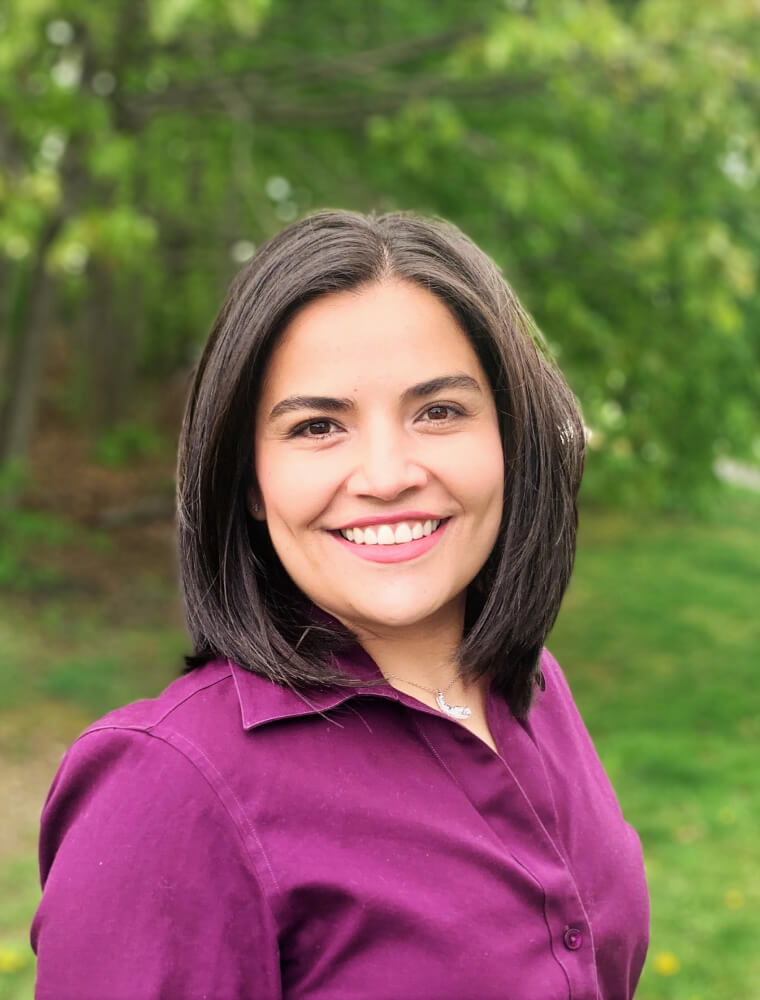
Anahí Venzor Strader, MD
Staff Physician, Children’s Hospital Primary Care Center, Boston Children’s Hospital
Instructor of Pediatrics (Part time), Harvard Medical School
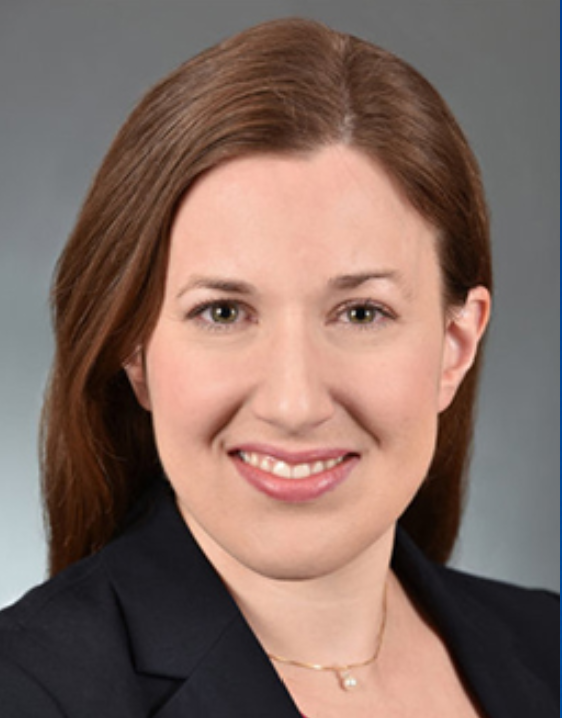
Moderator: Miya Bernson-Leung, MD, EdM
Program Director, Child Neurology Residency Training Program, Boston Children’s Hospital
Medical Director of Continuing Education, Center for Educational Excellence and Innovation, Boston Children’s Hospital
Assistant Professor of Neurology, Harvard Medical School
This episode of the Boston Children’s Hospital Clinical Pathways Podcast introduces the pathway for Newly Arrived Immigrant Patients, designed to support clinicians during the first primary care encounter but also applicable to other care settings. The discussion highlights evidence-based screening recommendations, common knowledge gaps around infectious tropical diseases, and the importance of flexibility and clinical judgment based on individual patient circumstances. Emphasis is placed on strengthening the medical home, building trust with immigrant families, and addressing social, mental health, and structural barriers to care alongside medical needs.
Clinical Pathways are educational reference tools developed by Boston Children’s Hospital clinicians which focus on the diagnosis and management of a wide variety of clinical conditions based on up-to-date evidence and expert practice. On this show, host Miya Bernson-Leung, MD, EdM, Medical Director of Continuing Education and a member of the Clinical Pathways Advisory Committee, interviews clinical experts to take you behind each pathway, discussing why the pathway was developed and key takeaways for clinicians seeking to implement the pathway and provide safe, effective, evidence-based care to children. You can find the full library at https://clinical.pathways.childrenshospital.org/.
Any treatment and/or medication recommendations within the pathway is provided for educational reference only, it is not intended as medical advice for individual patient care. Decisions about evaluation, diagnosis, and/or treatment are the responsibility of the patient’s treating clinician and should always be tailored to the individual patient’s clinical care needs.
Learning Objectives:
At the conclusion of this educational program, learners will be able to:
- Identify key components of the initial health evaluation for newly arrived immigrant children, including recommended biopsychosocial, infectious disease, and preventive screenings tailored to region of origin and migration history.
- Apply a patient-centered, trauma‑informed approach to caring for immigrant families, incorporating cultural humility, sensitive communication, and appropriate use of community and health-system resources.

In support of improving patient care, Boston Children’s Hospital is jointly accredited by the Accreditation Council for Continuing Medical Education (ACCME), the Accreditation Council for Pharmacy Education (ACPE), and the American Nurses Credentialing Center (ANCC), to provide continuing education for the healthcare team.
Physician
Boston Children’s Hospital designates this live activity for a maximum of 0.5 AMA PRA Category 1 Credits ™. Physicians should claim only credit commensurate with the extent of their participation in this activity.
Nurse
Boston Children’s Hospital designates this activity for 0.5 contact hours for nurses. Nurses should only claim credit commensurate with the extent of their participation in the activity.
Physician Assistant
Boston Children’s Hospital has been authorized by the American Academy of PAs (AAPA) to award AAPA Category 1 CME credits for activities planned in accordance with AAPA CME Criteria. This activity is designated for 0.5 AAPA Category 1 CME credits. PAs should only claim credit commensurate with the extent of their participation.
Pharmacy
This activity carries a maximum of 0.5 contact hours. Pharmacists should only claim credit commensurate with the extent of their participation in the activity.
Disclosures
Boston Children’s Hospital adheres to all ACCME Essential Areas, Standards, and Policies. It is Boston Children’s policy that those who have influenced the content of a CME activity (e.g. planners, faculty, authors, reviewers and others) disclose all relevant financial relationships with commercial entities so that Boston Children’s may identify and resolve any conflicts of interest prior to the activity. These disclosures will be provided in the activity materials along with disclosure of any commercial support received for the activity. Additionally, faculty members have been instructed to disclose any limitations of data and unlabeled or investigational uses of products during their presentations.
The following planners, speakers, and content reviewers, on behalf of themselves, have reported the following relevant financial relationships with any entity producing, marketing, reselling, or distributing health care goods or services consumed by, or used on patients:
Anahí Venzor Strader, MD
None
Miya Bernson-Leung, MD, EdM
None
Please see the FAQs below for common questions about how to work through a course. If you have a question or issue that is not addressed in the FAQ, please use this form to submit a help request, or if your issue is urgent, call the CME office at: 617-919-9908.
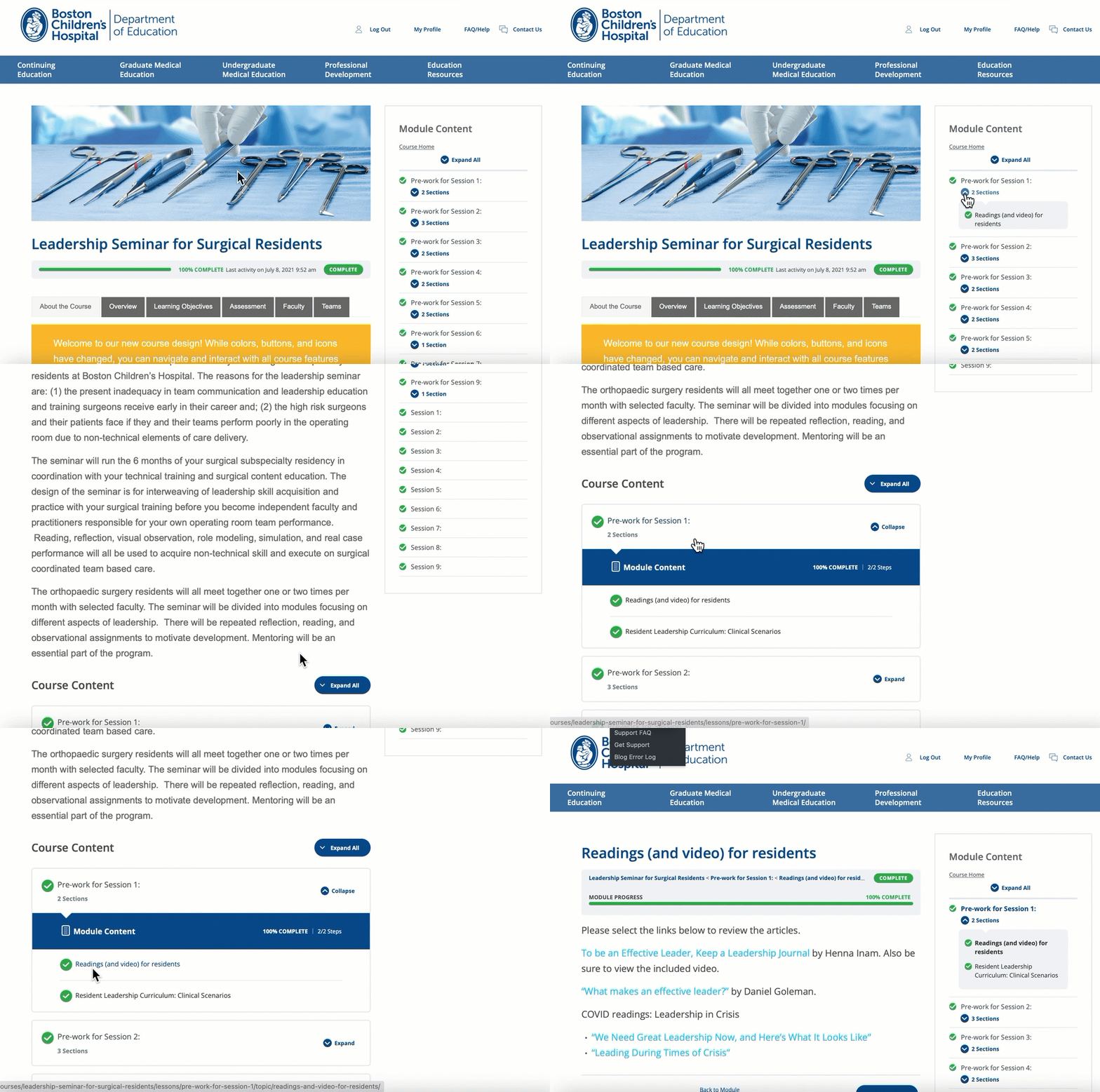
How do I navigate this course? There are two ways to access and navigate course content with the interactive table of contents: at the bottom of the main course page or in the sidebar on the right side of the page. Select the links in the table of contents to access the corresponding content. Depending on the course, access to content may be linear, in which case each content module or section can only be accessed if the prior ones are completed, or non-linear, in which case modules and sections can be accessed in any order. Use the breadcrumbs at the top of any course page to orient yourself within a course, or return to a previous course section or the main course page. How do I claim credit? If the course has been accredited, available credits will be displayed on the course home page. Select only those credits that apply to your profession, and click/tap “Apply Selection.” You may make your selection at any point while you are taking the course, or after you have completed it. How do I download a certificate? There are two ways to view/download your certificate: from within the course or from the course listing under your profile (select the document icon). In either case, you must have selected at least one available course credit type to generate a certificate. How do I view/print my transcript? You must be logged in to view your transcript. Select My Profile at the top of the page. If you do not see the transcript selector, be sure the Courses tab is selected. Select the type of credit and dates to include in your credit report. To include all credits from all time, leave the options blank. Select Download Transcript to view/download your transcript. Note each credit type in your transcripts starts a new page. How do I request a refund? Please email the CME Department to request a refund.How do navigate this course?
How do I claim credit for this course?
How do I download a certificate?
How do I view/print my transcript?
How do I request a refund?
View on Zencastr
Click Here to View Transcript
Miya Bernson-Leung 00:03
Hello and welcome to the Boston Children’s Hospital Clinical Pathways Podcast, a collaboration between the program for Patient Safety and Quality and the Center for Educational Excellence and Innovation. I’m your host, Miya Bernson-Leung, Medical Director of Continuing Education and a member of the Clinical Pathways Committee. Clinical pathways are educational reference tools developed by BCH clinicians based on current available evidence and local practice, which focus on the diagnosis and management of a wide variety of clinical conditions and allow discretion based on clinical judgment. You can access the clinical pathways library, including the pathway we will discuss in today’s episode, at clinical.pathways.childrenshospital.org, or on the BCH Clinical Pathways app for iOS or Android. In this podcast series, a team of moderators and I will interview clinical experts from Boston Children’s Hospital to take you behind the pathways. Why was the pathway developed, and what clinical need or practice problem is it trying to address? What are common knowledge gaps about the pathway’s topic and key takeaways for clinicians seeking to implement the pathway and provide safe, effective, and evidence based care to children. Each episode is accredited for continuing education credits for physicians, PAs, nurses, and pharmacists. To claim credit, go to dme.childrenshospital.org/clinicalpathwayspodcast. We hope you enjoy today’s episode. The moderators and speakers for today’s podcast have no relevant disclosures or financial conflicts of interest. Welcome to the Clinical Pathways Podcast. This is your host, Miya Bernson-Leung, and the pathway we will be discussing in today’s episode is the Newly Arrived Immigrant Patient. I am so pleased to have in the studio with us today Anahi Venzor Strader, a staff physician at Boston Childrens Hospital and Winchester Hospital, faculty in our Global Health Program, an instructor of pediatrics part-time at Harvard Medical School, and a researcher in the Maya Health Alliance. Welcome Anahi.
Anahi Venzor Strader 02:07
Thank you, Miya, and thank you so much for having me here.
Miya Bernson-Leung 02:11
It’s a real pleasure. Really looking forward to talking about this pathway with you.
Anahi Venzor Strader 02:14
Me too.
Miya Bernson-Leung 02:15
Well, I’m looking forward to hearing more from you about this pathway. Can you give us sort of an overview. What’s it all about? Who’s it for?
Anahi Venzor Strader 02:23
The newly arrived immigrant pathway, it is to mostly provide recommendations for physicians or the providers at that kind of first encounter with recently arrived immigrant patients. So it’s tailored for that specific first visit when they’re looking to establish primary care in the US, we focus on providing guidance based obviously, on the evidence and the published evidence about biomedical and infectious screenings that these patients should have and often need or just will simply benefit from. And our recommendations are based also on the region of origin, where they come from, or where they spend a significant amount of time. It does encompass more information about just in general, immigrant child health, and they can be used for patients who come in temporarily as well, for example, for procedures or things like that.
Miya Bernson-Leung 03:14
Can you tell our listeners more about the inclusion criteria for the pathway and who you really intend it to be used for?
Anahi Venzor Strader 03:21
It can be hard to define who these families are, right? Like, maybe it’s the first time that they show to a primary care, but it’s not necessarily the first time that they show to the medical system. They have had a couple of, of ER visits in the past, and then they come to primary care. So they can definitely use it, right? Maybe families have been here for a couple of years, but haven’t had the need to access primary care, and so are they considered a new immigrant? You know, it’s hard to set a very strict set of guidelines. And specifically, if we’re trying to- for this pathway to be more widely used, I do encourage physicians in their own setting to kind of create their own sets of guidelines. For example, we see here in particularly, JP [Jamaica Plain], a significant immigrant population from the Dominican Republic who, especially through the pandemic, were kind of coming and going and spending months there and then months here. So again, this immigration is constantly changing, constantly moving and and so just encouraging you to adapt your inclusion criteria to what- to what is needed. We have also found that the global surgery program, for example, has used the pathway in the- in some instances where patients come from different regions of the world for a specific procedure or a specific treatment, and they need, like a bit of guidance on what should be done prior to the procedure. I think that’s a wonderful use. And I’m just excited to see other ways in which, in which clinic, in which families can ultimately benefit from this pathway. So if you have more ways and innovative ways on of using it, just very happy to hear about that as well. But just that, that note on inclusion criteria that we try to be as strict as possible, but it just we have to be more inclusive, right? And we have to be more creative in the way we use this. So whenever you feel it’s helpful, just let us know.
Miya Bernson-Leung 05:13
So that leads me to a follow up question. One of the things you mentioned is that these children may not necessarily have primary care as their first point of contact with the health system. Maybe they’re presenting for urgent care or emergency care because they have an asthma exacerbation or a fracture or what have you. What recommendations would you have for the acute or emergency setting about incorporating some of these recommendations for immigrants? Or would you recommend that they just focus on helping them establish with primary care?
Anahi Venzor Strader 05:45
Yeah, we have thought a lot about that as well, because we know that a lot of our families would present to the ER first, and instead of rolling out the pathway to the ER physicians, we have just focused on making the connection to primary care. Because I think there, there just seems there needs to be a connection between the place where the labs were done and where it can be follow up. I think that that’s the easiest. And I think there has to be that conversation of what preventative services are. Really, I think that there are a lot of places in the world that in which preventative health services and primary care are not as mainstream as we think about, and so just the idea of coming with your child to the doctor when they’re not sick is, like, a little bit confusing, and so there has to be a little bit of a space to kind of explain, this is what a medical home is, and we are doing a lot more than, you know, than just a normal visit, because we want to set you up for success. And you might not have had these like screening, for example, the newborn metabolic screen that a baby born here would have had, but a baby born abroad would not have, right? And so I think that’s why it is complicated to use in the urgent care or emergency setting. But absolutely, if you are concerned about neglected tropical diseases in your patient population, and you need, just like, a quick guide as to what might they have been exposed to, I think this is a good pathway, and, like, just very tailored, because I already have a clinical suspicion.
Miya Bernson-Leung 07:17
And how did you personally become involved with this topic?
Anahi Venzor Strader 07:21
So I am myself an immigrant. I came to the US from Mexico in 2016, so I have witnessed just how difficult it can be to access healthcare, and I have kind of experienced it from both sides, from the patient side and also the provider side. I understand firsthand that these first visits when you want to establish a relationship with an immigrant family can be quite chaotic. There can be language discordance, language barriers. There’s just multiple things to talk about, to go through, to think about, and it can be quite disorganized and leave providers with a sense of dread, of maybe I didn’t do as good a job as I could. So we are trying to just provide some ease, at least, related to the biomedical and infectious screening. You know, where can I find the evidence? And it can be more streamlined, so that I can make decision faster and order things faster, and it can focus my time on getting to know this family, on getting to form a relationship with this family. I do have to say, though I was not involved directly in the development of the pathway, I have to give a shout out to Dr Bianca Quiñones-Pérez, Dr Elyse Portillo and Dr Jackie Shea, who, in their residencies, through their fellowships, developed this pathway, or set the first steps to this pathway. So I’m really happy to have continued their work.
Miya Bernson-Leung 08:39
Well, that’s wonderful. It sounds like all of you really saw a clear need for better support for both clinicians and these families that are coming into primary care. Are there particular practice problems that you’ve seen or knowledge gaps that you’re hoping that the pathway will really help people to address?
Anahi Venzor Strader 08:57
So I think in general, the the intersection of primary care and immigrant health brings a lot of complexities, right? And like we talked about, some of them only include, like the language barriers and different documentation, different systems and expectations of what preventative health care is. And so all of those complexities is what the pathway attempts to get into, also the evidence about, you know, what testing is needed for different patients is quite variable. There’s a lot of evidence out there, but it’s not streamlined or easy to access and easy to make decisions in like a 20 to 40 minute encounter. So those were the major issues that this pathway tries to address. We tried to provide kind of more tailored recommendations based on where the patients spend some time or where the patients lived before, which obviously has impact on their exposures to certain particularly infectious diseases. We found that in some areas the evidence is not quite clear as to what to do, and it cannot be also generalized to everywhere in every state or every region. So we incorporated. It was very important for us to incorporate expert opinion as well, so it is evidence based, and we’ll talk about kind of the sources of information that we use. But expert opinion was really important on issues that are not as clear, for example, like testing stool over- stool for parasites, versus presumptively treating right? Those are things that ultimately the clinician has to make in in their clinic setting, depending on, like the availability of Albendazole, or like how easy it is for patients to bring the samples back, etc. So there are a lot of nuances like that in the pathway, and we try to acknowledge them as much as possible. A new thing that we have found as well as, for example, tuberculosis screening. For the longest time, you know, we have two major ways of screening for tuberculosis, the skin test, the PPD, which can take up to three or four days and multiple visits to the clinic to interpret, versus the IGRA or the like, immunoassay, which is just a blood test that you grab once and it can give you one way or the other. And for the longest time, Red Book only recommended it for two years and older, the IGRA, so we had to still depend on PPD for young kids, but thankfully, the evidence has changed, and now all ages are acceptable to have IGRA for screening, which has been really good. So those are kind of the things that we are looking for, matching the evidence with our recommendation in the pathway.
Miya Bernson-Leung 11:37
That’s really helpful to hear areas that you know may have changed even since people did their training, or just as practice has shifted over time. Are there any other areas like that that you’d particularly want to call out on the pathway that you think people may have learned to do something in one way and now the evidence has shifted, or the expert consensus has shifted?
Anahi Venzor Strader 11:56
I don’t think that there’s as much new evidence. Mostly we have focused on just kind of bringing in also neglected diseases, for example, Chagas disease, which screening rates and treatment rates here in the US are very, very low. But we know that we have so many people that come from Latin America, which is the most endemic area, and it can cause lifelong consequences. So we do incorporate that, for example, in our pathway as well. It- the evidence might not have changed as much, but just kind of bringing back things that… doctors, honestly, we don’t get educated on Chagas disease as much, right, on tropical diseases, because it depends on our epidemiology here. So it just kind of things like that that it might not been seen as with much detail in medical school. So we want to incorporate those into our pathway, like Chagas disease, schistosomiasis, Strongyloides, other like tropical diseases that we don’t hear about a lot here.
Miya Bernson-Leung 12:54
That’s really helpful, and that sort of highlights the utility of this as a clinical pathway. It’s not a clinical guideline from a national organization or something like that, because, as you said, in some places, there may not be hard evidence in one way or another, but just recognizing, bringing all of these different expert knowledge components together to make sort of a set of best practices.
Anahi Venzor Strader 13:17
Yeah, exactly. And so there are ways in which we can adapt. We recommend, for example, ova and parasite testing for stool, but we recognize that it can be really hard for families to obtain and bring these samples. Treating presumptively with Albendazole might be a good alternative, but not in every state, Albendazole is easily available or cheap. It can be really expensive to to buy this medicine, and so just kind of leaving that as well, at that door open for clinicians to adapt to their settings.
Miya Bernson-Leung 13:47
And that’s one of the things that struck me about this pathway, is that you so beautifully balance giving all this information and guidance for a clinician to be able to just cut through and say, What do I need to do? What do I need to know, but at the same time really emphasizing that individual piece. And as you mentioned at the beginning, it’s really about giving clinicians a chance to get to know the family, get to know the child better. Related to that, there were some areas on the pathway really dependent on either the individual history of the child or the individual history of the parent. With respect to some harder things to talk about, potentially in the clinic, like history of human trafficking or history of abuse, history of HIV, and then certainly potentially very sensitive areas like immigration status. Could you tell us more about your advice for how best to bring those up in a sensitive and productive way in these clinic encounters?
Anahi Venzor Strader 14:43
Yes. So apart from giving recommendations about the, like the clinical biomedical and infectious screening, we also think about just areas of the social history in general and overall context that might be helpful, especially screening and treating mental health and screening for trauma is such an important part of that, right? So just, I think, we partner in our pathway with educational initiatives for resident physicians and for attending physicians, that we try to see them regularly and talk to them just about how to approach these and to know that, first and foremost, building a relationship with the family is important, and mentioning that if these questions are asked, it’s because they do tailor where, like certain exposures that the child might have had that are important for their health coming up. And so how much time did they spend, for example, at any shelter if they were displaced, or how much time did they spend at another country while their asylum case was being heard? And that would tailor different things. Another aspect is, for example, the immigration status here, particularly here in Massachusetts, we don’t necessarily have to talk about the immigration status in the clinic. I don’t think that it’s something that needs to come up routinely, but if it needs to for any chance, I think that prefacing with this, that this is confidential information, that we have no intention of sharing it with any agency and protect their information is very important, and to say that we’re only asking because we know that this might shape their health in one way or another in the future. We know it is a social determinant of health, right? And we do recommend in the pathway, do not document it. If it happened to be mentioned, either immigration status of the family or, or the child that themselves, no need to mention in the EMR, to document it in there. So we do talk about that there’s a lot of fear, and just to recognize that there’s a lot of fear for immigrant families to access this. I do have to say something just related to that. This pathway was also very tailored to families who come to the United States outside of the refugee program, because our clinics do not frequently see refugees. They usually have a much, well, I wouldn’t say more complex, but a very different pathway into coming in the States, which usually requires health screening with vaccinations and with different labs done for them. So they usually have kind of a more sturdy evaluation by the time they come here. But most of them do not arrive at our clinic. Actually, the immigrant families that we see here are ones that just got here from their own, on their own, not as refugees, so through other pathways. And so that’s why we wanted to provide more thorough guidance, because they have, usually they come here and they do not have any records from from their country.
Miya Bernson-Leung 17:42
Got it, thank you for that clarification, and thank you for highlighting the mental health support piece as well, and again, returning to this theme of being able to partner with each family and really support them in their journey, in this phase of it. Can you tell us more about resources that are available in addition to the pathway? The pathway refers to the AAP’s Immigrant Health Toolkit. Are there other things that our listeners might want to be looking to to help them to take care of these children?
Anahi Venzor Strader 18:09
Absolutely. So first, I recognize that we didn’t talk a lot about where our data comes from or where kind of we look for new data coming up. We take a look at global statistics for some of like epidemiology statistics, for some of the infectious disease, and just kind of how, where they are prevalent. We look a lot at the Red Book from the AAP, the CDC guidelines and evidence, although have to recognize that it mostly it’s tailored from refugee population, so not quite representative of the wide spectrum of immigrant journeys that we see here in our clinics or throughout the rest of the United States. The AAP toolkit, like we talk about, and then we rely a lot on expert opinion. So those are the sources that we’re frequently monitoring. There are other independent sources as well, but in terms of sources or resources that can be accessed, I will provide links for different things that I really like that I have learned a lot from, definitely the toolkit from the AAP, which is recently redesigned. It has, like even a physician checklist for all the like labs that you would need to do, and in different resources. Separate it from like, if you think about mental health versus like housing and other social determinants, versus like infectious screening, etc. So definitely good, but it’s, it’s more comprehensive, and just, you know, it will take more time to go through it. BMC, Boston Medical Center, it has a large immigrant and refugee health center, and they have resources for immigrants and refugees, mostly tailored for families, but it can be a good place to just kind of get a lot of information. I always talk about Doctors for Immigrants. You can find them at doctorsforimmigrants.com and they have a toolkit as well, and it is not only pediatric population. So definitely, if you are like in the med peds or family physician realm, very, very good toolkit for you guys. If you’re in Massachusetts, definitely have the HealthySteps app, which is another of Boston Children’s Hospital team, right before Dr Fleegler developed this app, which can help you connect families to social resources, to social and different types of social assistance, everything from housing insecurity to legal aid to like addiction tools, management tools or centers. It is a great resource, and you can just have it in your phone and ask your families to download it, and they can also look up centers and get more information. And lastly, the Sanctuary Doctor Toolkit. It is a very helpful kind of materials for for physicians who are trying to kind of build more resources in their clinic, for families, for immigrant families, like legal aid, legal medical partnerships, or case management and things like that.
Miya Bernson-Leung 21:00
Thank you for bringing together all of those resources. We’ll definitely make sure to share those in the show notes for this episode, as well as on our clinical pathways podcast website. Anahi, is there anything else that you would like our audience to know about this important topic?
Anahi Venzor Strader 21:16
I think that, just a reminder that our immigrant patients constitute a very specific and special patient populations. They can certainly have multiple exposures in just the immigration journey themselves, which can lead to suboptimal health outcomes. And I think we know that there’s a lot of information and evidence about it, but they are also an incredibly rich population with tons of strengths, with tons of assets that can certainly reverse those potential negative outcomes if they receive the support they need. So ultimately, our goal with the pathway, even though we don’t talk specifically about it, is to strengthen the relationship between immigrant patients and their primary care physician, is to create that a little bit like, stronger relationship that can last a lifetime. How do we do it? Through maybe just cutting time on, like, how much time they need to spend, the provider need to spend making decisions about what to order and kind of how to manage that. I think that that will be, I think that will be, hopefully, a way in which they can engage more in, getting to know their patients, getting to know the strengths that their families have and how they can actually contribute to our society, right? And how are they bringing those strengths together to build their family, their community, and our society at large. Think that that’s basically the goal of the work we do here, although we do it through a very like specific way in which we ultimately talk about parasites and tropical diseases and stuff like that. But it’s ultimately to just bring people together.
Miya Bernson-Leung 22:57
I love that. So one of the goals for the clinical pathways as a resource is that they are constantly being updated to reflect new understandings, whether that’s changes in the literature or just increased clinical experience of the pathway champions. Are there any changes that have been made recently or in the process of being made that you’d like to make sure our listeners are aware of?
Anahi Venzor Strader 23:20
Yes, thanks for asking that. We are actually very connected and very involved with our own outcome data, because this is still like a QR project from primary care department, so we are closely monitoring the patients who have been tested and who have been ordered the test correctly in that first encounter, and who most, especially, like, who becomes positive and kind of what happens with those positive screens. For example, in tuberculosis, we have seen in 2024 several cases of positive screenings which we have we recommend pulmonology referral, and we have seen that these patients were finding significant barriers to access the subspecialty care, either for scheduling purposes or just couldn’t make it to their appointments. And sometimes there were delays of up to three months of encounter- encountering treatment, which we know can be very dangerous for patients to have that or to be, to turn from a tuberculosis infection, which would used to be called latent tuberculosis, into a tuberculosis disease which is active TB, right? And so in order to address that, we are recommending now to maybe include presumptive treatment for primary care providers to start presumptive treatment, first and foremost, to see them back at the clinic right when they have a positive screen to look for symptoms of active disease or TB disease, to do a chest X-ray, because that’s another way of distinguishing both conditions, and if there are no obvious signs of active disease, we recommend the starting of presumptive treatment for latent TB or TB infection. And we provide, like, a couple of different regimens in there with a link of more nodes. So yes, we are very tailored. Another thing was, like the open parasite, for example, a lot of our families could not make it with the stool samples to the lab, just because it’s really hard to come back three days in a row, or X, Y or Z. So we are trying to tailor those recommendations as much as we can, although it’s not always possible, but we are very committed to helping our families overcome these barriers to ultimately just achieve the health, the healthcare they need.
Miya Bernson-Leung 25:43
So we ask all of our guests on this podcast the same question, if you could create or commission a pathway about anything in the world, what would it be?
Anahi Venzor Strader 25:53
So I thought about this a lot a long time, and actually, my husband is a dog trainer, so setting all complexities of dog training and dog personalities aside, so I think it would be great to- if he, if I could commission him to, like, do a pathway on how to train your dog to, you know, and you can just add your thing. Maybe, for me, it would be definitely like just to come and cuddle with me when I need it the most. But you could, you could add your own thing. Of course, it would be very hard, but I think it would be a fun pathway.
Miya Bernson-Leung 26:23
I love it. We have a five year old rescue who’s mostly well behaved, so I will definitely hit you up if you ever do actually create that pathway.
Anahi Venzor Strader 26:31
Absolutely.
Miya Bernson-Leung 26:32
Wonderful. Anahi, thank you so much for the work that you and your team have done to put all of this together and all of the ways that you’re working to strengthen the medical home and the ability of our listeners to care for and partner with these families.
Anahi Venzor Strader 26:47
Thank you so much Miya for having me, and I want to give another shout out to the providers at Martha Elliott Health Center who have been just so important, paramount to the continuation of this work. And yeah, I’m very excited for it to be more widely available.
Miya Bernson-Leung 27:03
Thank you and thanks for listening. We hope you’ll join us next time on the Clinical Pathways Podcast. Thanks for listening to this episode of the Clinical Pathways Podcast from Boston Children’s Hospital. Please leave us a review, like, and subscribe wherever you get your podcasts. A reminder to all physicians, PAs, nurses, and pharmacists: to claim your continuing education credits for listening to today’s episode, please visit dme.childrenshospital.org/clinicalpathwayspodcast and complete the short survey attached to this episode. The content of this episode and the related pathway was developed by clinicians at Boston Children’s Hospital. Any treatment and/or medication recommendations within the pathway is provided for educational reference only. It is not intended as medical advice for individual patient care. Decisions about evaluation, diagnosis and/or treatment are the responsibility of the patient’s treating clinician and should always be tailored to the individual patient’s clinical care needs. For more information about the clinical pathways or this podcast series, email pathways@childrens.harvard.edu. You can also find the Center for Educational Excellence and Innovation on LinkedIn, at linkedin.com/showcase/bostonchildrensceei.